


Keynote Speakers
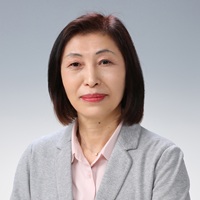
Prof. Atsuko K. Yamazaki, Digital Hollywood University, Japan
Atsuko K. Yamazaki serves as a Specially Appointed Professor at the Graduate School of Digital Hollywood University, Japan. Her expertise lies in communication studies, information science, systems engineering, human and digital communication studies, and global education in engineering. She holds a Bachelor of Science in Chemistry from Ibaraki University, a Master of Arts in TESOL from the Monterey Institute of International Studies, a Master of Science in Computer Science from the University of Maryland, and a Ph.D. in Systems Engineering from Wakayama University. Previously, she served as an adjunct research instructor at the Naval Postgraduate School in Monterey, California, and as a visiting researcher at the Woods Hole Oceanographic Institution. In 2021, she joined DHU Graduate School after spending 13 years as a Professor at Shibaura Institute of Technology. Her research has been published in journals such as Ecological Modelling, Deep-Sea Research, IEEE, KES, Japan Society for Artificial Intelligence, Japanese Society for Information and Systems in Education, among others. Her current research and projects focus on communication studies utilizing UI, VR, brain function measurement, and simulation. She is also actively involved in global talent development and corporate DX projects. Furthermore, she has contributed to academic societies as an editor and officer, including IEEE Professional Communication Society and the Japan Leadership Society.
Speech Title: The Gap Between Technology for Education and School Practice
Abstract: This keynote examines the persistent gap between rapid advancements in educational technology (EdTech) and their meaningful integration into school practice, with a particular focus on communication education. Recent innovations in artificial intelligence (AI), learning analytics, and immersive technologies such as virtual reality (VR) offer new opportunities to enhance communicative competence through interactive, experiential learning. For example, VR environments can simulate authentic communication contexts, enabling learners to practice language and interaction skills in realistic settings. However, despite these possibilities, implementation in schools remains limited. Key challenges include misalignment with curriculum and assessment systems, limited teacher involvement in technology design, insufficient pedagogically oriented professional development, and institutional constraints. In addition, disparities in access and digital competence continue to affect equitable adoption. This keynote argues for a shift toward pedagogy-driven, communication-centered approaches to EdTech integration. It highlights the importance of co-design with educators, curriculum alignment, sustained professional development, and context-sensitive implementation. Ultimately, the effectiveness of EdTech should be evaluated by its ability to support meaningful interaction and real-world communication. Bridging the gap requires collaboration among educators, researchers, developers, and policymakers to ensure that technology enhances, rather than disrupts, communication learning in authentic educational contexts.
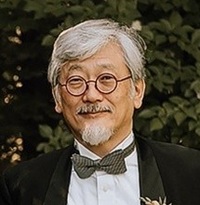
Prof. Ryuji Kohno, IEEE and IEICE Life Fellows
Professor Emeritus, Yokohama National University, Japan,
Vice-President, YRP International Alliance Institute, Japan
Speech Title: Harmonized Coexistence of Wireless Commercial Infra and Ad-hoc Networks, and with Scientific Radio Systems for SDGs
Ryuji Kohno received the Ph.D. degree from the University of Tokyo in 1984. He was a Professor and the Director of Centre on Medical Information and Communication Technology, in Yokohama National University in Japan for 1998-2021 and then Professor Emeritus. In his currier he played a part-time role of a director of Advanced Telecommunications Laboratory of SONY CSL during 1998-2002, directors of UWB Technology and medical ICT institutes of the National Institute of Information and Communication Technologies (NICT) during 2002-2012. For 2012-2020 he was CEO of University of Oulu Research Institute Japan – CWC-Nippon Co. and since 2020 Vice-President of YRP International Alliance Institute. The meanwhile for 2007-2020 a distinguished professor in University of Oulu in Finland and since 2006 an associate member of the Science Council of Japan(SCJ). In IEEE he was a member of the Board of Governors of Information Theory Society in 2000-2009, and editors of Transactions on Communications, Information Theory and ITS, IEEE802.15 standardization TG6ma Chair and IEEE Life Fellow. In IEICE he was Vice-president of Engineering Sciences Society of IEICE during 2004-2005, Editor-in chief of the IEICE Trans. Fundamentals during 2003-2005 and IEICE Life Fellow. He is a founder and a chair of steering committees of international symposia of medical information and communication technologies (ISMICT) since 2006, general and TPC chairs in many international conferences such as PIMRC99, SDR02, ISIT03, UWBST04, ISMICT06&15, etc.
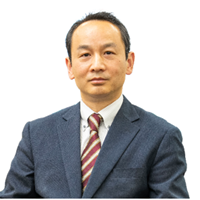
Prof. Lin MENG, Senior Member of IEEE and Member of ACM, IPSJ, IEICE, and IEEE
College of Science and Engineering and head of the Intelligent High-performance Computing Lab., at Ritsumeikan University (RU), Japan
Lin MENG is a Professor at the College of Science and Engineering and head of the Intelligent High-performance Computing Lab., at Ritsumeikan University (RU), Japan. He received his Ph.D. from the Graduate School of SE at RU 2012. He was a Research Associate, Assistant Professor, and lecturer at the Dept. of ECE, RU. In 2015, he was a visiting scholar in the Dept. of CSE, University of Minnesota at Twin Cities, USA. His research interests include Computer Architecture, Parallel Processing, Intelligence High-Performance Computing (IHPC), FPGA-based Accelerator Design, the Internet of Things (IoT), and Artificial Intelligence (AI). He has published over 400 papers, including IEEE TASE, IEEE TETCI, IEEE TIM, IEEE TSC, IEEE TITS, IEEE IoT J, Adv. Sci., AIRE, APIN, Neurocomputing, Heritage Science, etc. He is among the top 2% of scientists in the updated science-wide author databases of standardized citation indicators created by Elsevier from 2023. He serves as an editor for several journals, including Internet of Things, IEEE-TCE, Biomimetics Intelligence and Robotics, IJAMechS, and others. He is also serving as the program chair for several international conferences in 2025, including IEEE RCAR 2025, IIKI 2025, and ICAMechS 2025 etc. In the past three years, he received several fundings from the NEDO and the Japan Science and Technology Agency (JST), Japan Society for the Promotion of Science (JSPS), etc. He is a senior member of IEEE and a member of ACM, IPSJ, IEICE, and IEE.
Speech Title: Lightweight Image-Based AI Model Design and Its Applications
Abstract: Image-based AI has been widely applied to tasks such as image classification, object detection, and anomaly detection. However, many of these applications must operate in hardware resource-constrained environments, such as embedded systems and edge devices. At the same time, current AI models often involve a large number of parameters and high computational complexity, which limit their practical deployment in such environments. In this talk, we present a comprehensive review and analysis of modern image-based AI models, including convolutional neural networks (CNNs) and Vision Transformers (ViTs). We then introduce several approaches for reducing redundant computation and enabling lightweight model design. In addition, we present practical implementations of these models in real-world applications, such as the integration of object detection models into food-service robots for automatic dish collection after meals, as well as nano-drones for agricultural applications. In the food-service domain, we further present a complete pipeline covering dataset collection, model development, and automatic AI model design. Finally, we highlight other AI-related achievements, including applications of image-based AI in cultural heritage preservation, bioengineering, and related areas.